
TL;DR
- Yes, the ATO can track ABN income through banks, payment providers, digital platforms, businesses and government data.
- Cash and private-client payments still need to be declared, even if they aren’t automatically reported to the ATO.
- The ATO can match third-party information with your tax return, BAS and other records.
- You can check available ATO information through myGov, but your own invoices, bank statements and payment records are still important.
- Missing or underreported income can lead to extra tax, penalties and interest, so correct any mistakes as soon as possible.
Yes. The ATO can track the income connected to your ABN.
That doesn’t mean the ATO is watching every payment as it happens. Instead, it gets information from different sources and can match that information against the figures you put in your tax return.
For example, income you receive through a business, contracting work, or some online platforms may be reported to the ATO. If you’re a tradie, freelancer, rideshare driver, or running a side business, there can be more than one record of the money you’ve earned. Depending on the platform and how you’re paid, services such as Uber, PayPal, and Stripe may also provide information that can be matched.
This is why it’s important to keep track of your ABN income throughout the year. Don’t wait until tax time and try to work it all out from memory. Keep your invoices, receipts, bank records, and payment records together so you can work out your actual income and expenses.
If the amount you report doesn’t line up with information the ATO already has, you may be asked to explain the difference. If your records are accurate and your tax return includes the income you actually earned, you have the paperwork to back up your figures.
Need Help Registering for an ABN?
Starting a new business or working as a sole trader? ISM Accountants & Advisors can help you register your ABN correctly and get your business set up for tax.
How Does the ATO Track ABN Income in Australia?
The ATO can get information about your business from several places. It can then check that information against what you’ve reported.
So, if you run a business under an ABN, the ATO may have records of payments or other business information that you haven’t directly provided yourself.
1. Bank and Payment Data Matching

The Australian Taxation Office (ATO) receives financial information from banks, financial institutions and other third parties. It uses data-matching processes to compare relevant information with tax returns and other records to identify potential discrepancies in reported income.
A large deposit or frequent bank transfer does not automatically mean that income has been under-reported. Deposits may include business revenue, personal transfers, loans, refunds or other amounts that require different tax treatment.
ABN holders should maintain accurate invoices, bank statements and accounting records so they can explain transactions and correctly report taxable business income.
2. Third-Party Reporting
The ATO receives information from various third parties, including certain online selling platforms, sharing-economy facilitators, financial institutions and businesses. Depending on the applicable reporting arrangements, this information may be matched against a taxpayer’s declared income.
Examples of information sources used by the ATO include:
Ride-sourcing and sharing-economy platforms: Information about payments made to participants may be collected under applicable reporting arrangements.
Online selling platforms: Information about online sales may be obtained through relevant ATO data-matching programs.
Financial institutions and payment providers: Certain information about investment income and electronic business payments may be reported or collected under applicable requirements.
Businesses paying contractors: Payments may need to be reported under the Taxable Payments Reporting System (TPRS) when the relevant rules apply.
Reporting obligations differ by platform, transaction type and reporting regime. Do not assume that every payment processed through PayPal, Stripe, Airtasker, Uber, eBay or Upwork is automatically reported to the ATO in the same way.
Regardless of whether a third party reports a payment, ABN holders must meet their own income-tax reporting obligations.
3. BAS and GST Information
If you are registered for GST, the information you report through your Business Activity Statements (BAS) gives the ATO another way to understand your business activity.
The ATO can compare information across different parts of your tax records. If the figures don’t appear to match, you may be contacted for more information or asked to correct an error.
4. Digital Accounting and Bookkeeping Software
Xero, MYOB, QuickBooks and Dext are commonly used to handle business accounts and bookkeeping. If you use one of these, some information can be sent to ATO systems when you or your tax agent use connected services.
The important thing to understand is that connecting accounting software to the ATO isn’t the same as giving the ATO full access to your account.
What can be shared, and when, depends on the service you’re using and the permissions in place. Your accountant or tax agent may also have access to the records needed to prepare and lodge information for you.
So, having Xero or another accounting program linked to an ATO service doesn’t mean the ATO can simply open the software and browse through all your records whenever it wants.
Recommended Read: Best Cloud Accounting Software in Australia
5. Taxable Payments Reporting System (TPRS)
The Taxable Payments Reporting System requires certain businesses and government entities to report payments made to contractors for specific services.
The report is called a Taxable Payments Annual Report (TPAR) and is generally due by 28 August each year. Industries covered by TPAR include:
- Building and construction
- Cleaning
- Courier and road freight
- Information technology
- Security, investigation and surveillance
The rules vary by industry, payer and transaction, and exemptions may apply. Government entities also have reporting obligations for certain payments for services and eligible grants to ABN holders. The ATO uses this information to match contractor payments with its records and identify discrepancies in reported income.
The ATO has expanded pre-fill services for sole traders and self-employed people, allowing eligible contractor payment information reported through TPAR to be pre-filled into tax returns. This can reduce manual data entry and improve reporting accuracy. However, taxpayers remain responsible for checking the information and declaring all income.
Recommended Read: How to Prepare for Tax Season in Australia?
6. Data Analytics and Machine Learning
Data is a big part of how the ATO checks tax information. The agency uses analytics and machine learning to work through large amounts of information and look for things that may need a closer look.
It might bring information from different sources together and compare it to what has been reported. If something stands out, such as figures that don’t seem to line up with other information available to the ATO, it can be flagged for review.
Having an ABN doesn’t mean your tax affairs are automatically investigated. These systems help the ATO decide where a closer look may be needed. A flag on its own doesn’t necessarily mean you’ve done anything wrong; the ATO may need more information before it can work out what the difference means.
7. Government and Other Data Sources
Banks and payment providers aren’t the only places the ATO can get information from. Depending on the type of activity involved, it can also receive information from government agencies and other organisations through reporting and data-sharing arrangements.
The information can cover things such as:
- government payments and grants
- property transactions
- superannuation
- online sales
- sharing-economy income
- other business or financial transactions
Online selling, property transactions and sharing-economy activities are among the areas where the ATO has specific data-matching programs.
So if you’re earning money from more than one source, the ATO may have information about different parts of your financial activity. It can compare those records with the information you’ve reported rather than relying on a single figure or source.
Recommended Read: How to Set Up ABN?
Can the ATO Track Cash Jobs & Private Clients?

Yes, but not necessarily every cash payment.
If a customer hands you cash and there is no bank transaction or third-party record, the ATO may not have that particular payment sitting in its records. That doesn’t make the income invisible, though. Cash income can still come to light during an audit or review, or when the ATO compares it with other financial information.
For instance, questions may come up if you:
- regularly receive cash from customers
- put large cash amounts into your bank account
- claim business expenses that don’t seem to fit with the income you’ve reported
- have a client or another business provide information about payments
- are contacted by the ATO as part of a review or audit
The same applies when you work for private clients. An arrangement doesn’t become invisible simply because there is no formal payroll record. If the ATO gets information about the work or the payments, it can use that information when checking your reported income.
What happens if you don’t declare cash income?
Cash income is still taxable income when it is earned from your business or work. Leaving it out of your tax return can result in additional tax, penalties and interest.
The General Interest Charge (GIC) can also apply to unpaid tax. The rate changes each quarter and interest is calculated daily. From 1 July 2025, GIC and shortfall interest charges incurred from that date are no longer tax-deductible.
Can You Get Away Without Declaring ABN Income?
Not declaring income you earned through your ABN can cause problems later. This is still the case if a customer paid you in cash or you worked for a private client.
The ATO gets information from a range of sources. It can compare that information with your tax return and other records. So, if the numbers don’t line up, you could be asked about the difference.
- The income can come to light later: For example, the ATO may receive information from a bank, payment provider, another business or a government agency. That information can be compared with the income you’ve reported.
- You may be asked to show your records: If the ATO has questions, you could receive a letter or notice asking for more information. Depending on the issue, this could include invoices, receipts, bank statements or other business records.
- Sometimes, it goes beyond a simple question: If there are wider concerns about your tax affairs, the ATO may conduct a review or audit. You’ll need to provide records and other information to support what you’ve reported.
- There may also be extra tax to pay: If you left income out of your return, you will generally have to pay the tax that should have been paid. Penalties and interest can apply as well. The General Interest Charge (GIC) may apply to unpaid tax.
- Your ABN is a separate matter: The ATO can cancel an ABN in certain circumstances, such as when a business has stopped carrying on an enterprise. A mistake in your tax return does not automatically mean your ABN will be cancelled.
If you realise you’ve missed income from an earlier tax return, don’t leave it unresolved. A registered tax professional can help you check the return and work out what needs to be corrected.
What Happens If You Don't Report ABN Income?
If you don’t report income linked to your ABN, the ATO can ask you to explain the missing income and may require you to correct your tax records. Depending on the situation, you could also face penalties and interest.
Penalties and Interest
Situation | What can happen |
Late BAS lodgement | A failure-to-lodge penalty may apply |
Failure to lodge a tax return | The ATO may contact you and take further compliance action |
Tax shortfall | An administrative penalty may apply, depending on the circumstances |
Unpaid tax | General Interest Charge (GIC) may apply |
Unpaid PAYG withholding | Directors can become personally liable in certain circumstances |
The amount of any penalty depends on what happened, why the obligation was not met and the circumstances of the case. The ATO uses statutory formulas and penalty units for some tax penalties.
Interest Charges Changed in 2026
There is also an important change to ATO interest charges.
From 1 July 2025, General Interest Charge (GIC) and Shortfall Interest Charge (SIC) incurred from that date are no longer tax-deductible.
GIC is calculated on a daily basis, and the applicable rate can change each quarter.
What About Criminal Prosecution?
Not every mistake or missed amount leads to criminal prosecution. Serious cases involving deliberate fraud can be treated very differently.
The ATO has used Operation Protego to investigate large-scale GST fraud involving fake businesses, fraudulent ABN applications and false BAS claims. The operation has resulted in convictions and prison sentences.
So, if you have made a genuine mistake with your ABN income, don’t panic. Get the records checked, correct the mistake and deal with the ATO rather than letting the problem grow.
Recommended Read: Can I Cancel ABN Online?
How Can I Check My ABN Income?
The easiest way to check your ABN income is to look at the information available through the ATO and then compare it with your own records.
Your business income might come from client payments, freelance work, contract work, online sales, payment platforms or cash jobs. Keeping your own record of all these payments is important when it’s time to lodge your tax return or BAS.
Check Your Income Through myGov
Step 1: Start by signing in to myGov.
Log in to your myGov account and open the ATO service. Your ATO account needs to be linked to myGov before you can access your tax information.
Step 2: Open ATO Online Services.
After signing in, select the Australian Taxation Office from your linked services. This takes you to your ATO online account.
Step 3: Look through the information available there.
Depending on your circumstances, you may see pre-fill information and details from previous tax returns or other lodgements.
Keep in mind that the information shown by the ATO isn’t necessarily a complete record of everything your business has earned. You should still keep your own records of every payment you receive.
Step 4: Then compare it with your records.
Go through your own bank statements, invoices, receipts, accounting records and payment platform reports. This gives you a better picture of your total business income.
If something doesn’t match, don’t assume one of the figures is wrong straight away. Check the payment and your records first so you know where the difference came from before changing anything in your tax return.
Other Ways to Check Your ABN Income
Check your accounting software.
If you use Xero, MYOB or QuickBooks, look at your income reports and bank transactions for the financial year. Bank feeds can save time, but it’s still worth checking that payments have been put into the right categories.
Go through your bank statements.
Don’t use accounting software? That’s fine. You can review your business bank statements and add up the income you’ve received during the financial year. Keep your invoices, receipts and other records with them in case you need to refer back to a payment later.
Look at your platform earnings.
If you earn money through Uber, Upwork or another online platform, sign in and check the payment or earnings reports available to you. Compare those figures with your own records so you don’t leave any income out.
One thing to remember: ABN Lookup won’t show how much money a business makes. It’s there to check an ABN’s registration details and other public business information.
Quick ABN Income Check
Start with your ATO online services, then check your own records. Go through your bank statements, invoices, accounting software and platform earnings. Putting these records together gives you a clearer picture of your total business income.
Recommended Read: Common Reasons For ABN Delay
Tools and Resources for ABN Income Tracking
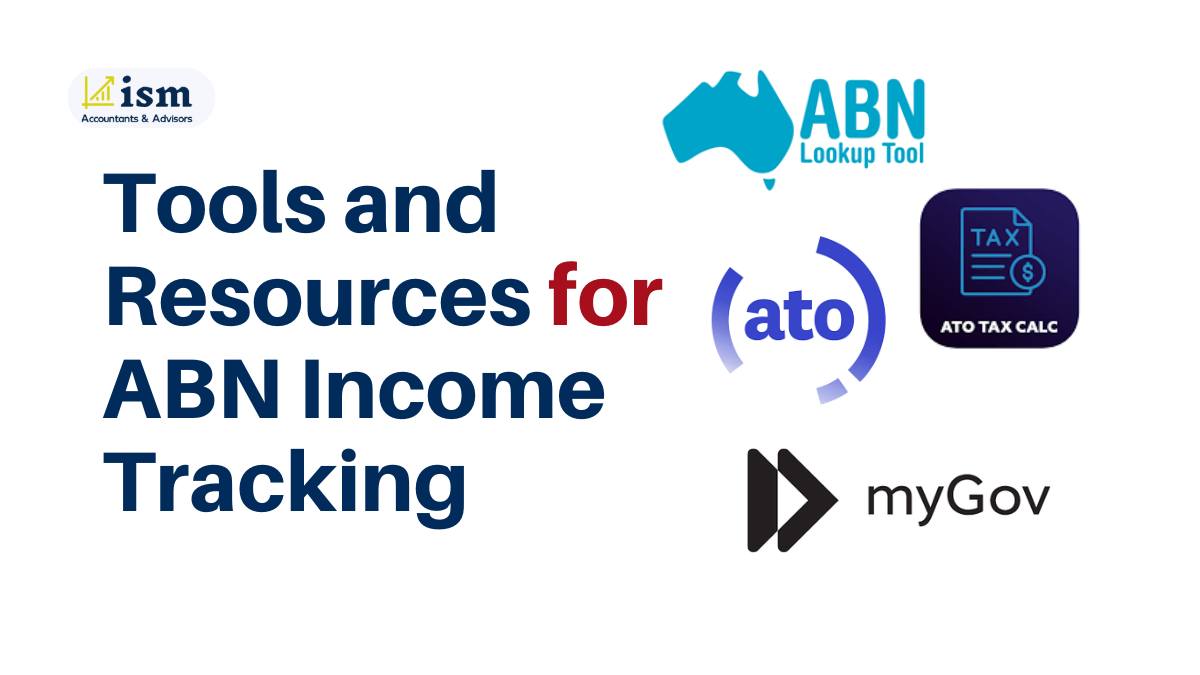
You don’t need to spend money on software just to keep track of your ABN income. If you’re starting out, the ATO and other government services have several free tools that can help. Paid accounting software becomes more useful once you’re dealing with regular invoices, expenses and BAS lodgements.
Free Tools
- myGov and ATO Online Services: Once your myGov account is linked to the ATO, you can manage a range of tax matters online. You can check your tax information, view available pre-fill details, lodge your tax return, manage your BAS and read messages or notices from the ATO.
- ABN Lookup: ABN Lookup is handy when you need to check an ABN. You can see whether an ABN is active, along with basic details such as the business name, entity type and GST registration where applicable.
It won’t tell you how much money a business earns. It’s mainly a way to check ABN details. - ATO Tax Calculators and Tools: The ATO has online calculators and other tools that can help with different tax calculations. Depending on what you’re trying to work out, you can use them to estimate tax, check deductions and calculate other amounts.
- ATO App: The ATO app puts some tax services on your phone. The features available to you depend on your circumstances, but it can be useful for handling certain tax tasks without having to log in from a computer.
Paid Accounting Software to track ABN
Once your business starts getting busier, keeping everything in a spreadsheet can become harder to manage. Accounting software can bring your invoices, expenses and bank transactions into one place and make it easier to prepare information for your BAS or tax return.
- Xero: Xero can help with invoicing, bank feeds and expense tracking. It also has features for BAS and tax reporting and can connect with other business tools.
- MYOB: MYOB offers invoicing, expense management and bank feeds, along with GST and BAS features. It can also make it easier to share financial information with your accountant.
- QuickBooks: QuickBooks includes invoicing, expense tracking and bank connections, with mobile access for managing your accounts on the go. It is aimed at small businesses and sole traders.
Recommended Read: Xero vs MYOB vs QuickBooks
You don’t have to start with paid accounting software. If your business is small and your records are straightforward, a simple system may be enough. As the number of invoices, expenses and transactions grows, software can take some of the work out of keeping your records organised.
How ISM Accountants & Advisors Can Help You Avoid ATO Trouble
Tax is one of those parts of running a business that can easily get pushed aside. You have clients to deal with, bills to pay and work to get done. Keeping up with your ABN income and ATO requirements can become another job on its own. ISM Accountants & Advisors can take some of that work off your hands and help you stay on top of your tax and accounting.
We can help with:
- BAS and tax return preparation and lodgement
- Bookkeeping services and keeping your business records organised
- Business and income tax advice
- Checking which business expenses you can claim
- Tax planning for your business
- Help if the ATO contacts you
- Support with ATO reviews and audits
- Ongoing accounting and tax support
If you’re not sure whether you’ve reported your ABN income correctly, you can talk it through with us. We’ll look at your situation, answer your questions and help you understand what needs to be done.
Book a free 20-minute consultation with ISM Accountants & Advisors. There’s no obligation and no cost to have an initial chat about your situation.
Quick Compliance Check: Is Your ABN Income Properly Reported?
Whether you’re freelancing or running a small business, getting your ABN income reporting right doesn’t have to be complicated. Let’s cover the essentials so you can focus on your work instead of worrying about compliance.
5-Minute Self-Assessment Checklist
Before you check how the ATO tracks your earnings, ask yourself:
- Have I declared all income (even under $75,000)?
- Do I keep records like invoices and bank deposits?
- Am I submitting Business Activity Statement(BAS) (if required) on time?
- Are my business expenses documented and reasonable?
If you answered no to any of these, you’re at risk.
Red Flags That Can Put You at Risk
The ATO looks for signs like:
- Lifestyle that doesn’t match declared income
- Frequent nil BAS returns (with signs of activity)
- Large cash deposits with no invoices or records
These trigger audits and deeper investigations.
Think your income records might raise red flags?
Final Thoughts: Can ATO Track ABN Income?
If you have an ABN, it’s worth keeping a close eye on the money coming into your business. The ATO can receive information from different sources, but your own records are still important. Keep your invoices, receipts, bank records and other income details together so you can see what you’ve actually earned.
For the 2026–27 financial year, don’t leave everything until the last minute. Record your income and expenses as you go, keep the paperwork you may need later and lodge your BAS and tax return by the relevant deadlines.
And if you’re not sure what needs to be reported, you don’t have to work it out yourself. ISM Accountants & Advisors can look at your situation and help you understand your ABN income and tax obligations. Reach out to us today!
Frequently Asked Questions
Can ATO see my ABN income even if I’m not GST-registered?
Yes, ATO can see your ABN income even if you’re not GST-registered. All income must be reported regardless of GST status. The ATO uses bank and platform data to verify.
What if I only earn a little from my ABN side hustle?
Even a small income (under $75,000) must be declared in your annual return.
Can I get in trouble for not declaring ABN income?
Yes, you can get in trouble for not declaring ABN income. You may face penalties, interest, and audits for non-compliance.
Does PayPal or Uber report my income to the ATO?
Yes, Paypal or platforms like Uber, Upwork sends your income data directly to the ATO.
Should I use a TFN or ABN for freelance work?
You should use an ABN for freelance work. A TFN is for employment income only.
Does the ATO check your bank account?
The ATO can obtain certain information from banks and financial institutions. It can use that information when checking tax affairs and comparing financial records with information reported in tax returns or BAS.
What should I do if I forgot to report ABN income?
Don’t simply leave it out and hope it isn’t noticed. If you find an error in an earlier return, you may be able to amend it or make a voluntary disclosure, depending on your circumstances. If you’re unsure what to do, speak with a registered tax professional.
How can I check my ABN income reported to the ATO?
Log in to your myGov account and open your linked ATO service. You can check the tax information available there, including pre-fill information where applicable.
It’s still worth checking your own records. Your bank statements, invoices and platform payment reports may show income that isn’t included in the information available through your ATO account.
What ABN income do I need to declare?
Income from your business generally needs to be reported. That can include money from clients, freelance work, online sales, cash jobs and digital platforms. Whether you get paid into a bank account, through an app or in cash doesn’t usually change that.