
Quick Summary
- Who can claim: Creators running an actual business, not a casual hobby, where expenses tie back to income, and you’ve got records.
- Main categories: Website and hosting, equipment, software, marketing, a slice of home office costs, work travel, accounting fees, relevant training, and outsourced content work.
- Mixed-use costs like phone, internet, and shared equipment only count for the business portion.
- Brand gifts and free products can be taxable income at market value, even with no cash involved.
- Records decide most disputes. No receipt or business-use calculation, and even a real expense can get knocked back.
Tax deductions for bloggers and social media influencers in Australia are available, but only for expenses genuinely tied to how you earn money from your content. A ring light bought because it photographs well isn’t deductible just because it shows up on camera.
The ATO doesn’t run a separate rulebook for creators. The test is the same one applied to any other taxpayer: Did you actually spend the money, does it connect to your income, is it not a personal cost, and can you back it up with a record?
A lot of bloggers and influencers spend mixed-use money: a phone used for content and personal messages, a laptop used for editing and everyday life, and a trip that covers both a shoot and a holiday. Only the business-use portion of these can be claimed, not the full amount.
This guide covers what you can claim, what’s only partly deductible, how gifted products and brand deals are treated, what you can’t claim, and the records you need to keep.
Can Bloggers and Social Media Influencers Claim Tax Deductions?
Yes, they can, but it depends on how you earn your money and what you’re spending it on. The first thing to work out is whether your blogging or social media activity is a business or just a hobby.
Business vs Hobby: Why It Matters
A hobby generally has no deductions, but its income usually isn’t taxed either. A real income-producing activity works the other way: you owe tax on it, but you also get to claim against it.
Posting content doesn’t automatically make you a business. The ATO looks at the actual facts of your situation. That means how regularly you post, how organised you are about it, whether you’re actually trying to profit, and how big the operation is. Someone posting for fun who occasionally gets sent a free product is closer to a hobby. Someone pitching brands and negotiating rates is running a business, often long before the money is significant.
If you genuinely can’t tell which side you’re on, that’s reason enough to get advice before you lodge anything.
If blogging or content creation has become a regular income-producing activity, you may also benefit from accounting services for creative professionals to manage your tax and financial obligations.
The Basic Rule for Claiming an Expense
Once you’re treated as a business, the test is the same for every expense:
- You actually paid it, and nobody reimbursed you.
- It’s directly tied to earning your income.
- It isn’t private or domestic.
- You’ve got a record, usually a receipt or invoice.
- If it’s used for both business and personal life, only the business slice counts.
Everything else in this article is just that test, applied to different things you spend money on.
Need Help With Your Creator Tax?
If you earn income from blogging, YouTube, social media, sponsorships or brand collaborations, ISM Accountants & Advisors can help you understand your tax obligations, identify eligible deductions and keep your records organised. From individual and business tax returns services to tax planning and bookkeeping, our Perth-based registered tax agents can help you manage your creator income with confidence.
What Tax Deductions Can Bloggers and Influencers Claim?
There are quite a few costs you may be able to claim when you’re making money from your content. Website costs, equipment, software, marketing, and other day-to-day business expenses can all come into it. The following are some of the common tax deductions in Australia that may apply to bloggers and social media influencers, depending on how the expense is used.
Website, Domain and Hosting Expenses
Domain and hosting fees are usually the first proper blogging expenses a creator ever claims: domain renewal, hosting, your CMS platform, paid themes, and plugins. If the same site also carries personal content unrelated to your income, only claim the business share.
Computers, Cameras, and Other Equipment
Laptops, cameras, mics, ring lights, and tripods are all deductible for the portion used in your business, though how you claim them depends on cost and structure.
If you’re not running a small business, anything $300 or less used mainly to earn income can usually be claimed in full straight away. Above that, it gets depreciated over its useful life instead.
If you are a small business entity with turnover under $10 million, the instant asset write-off currently lets you deduct eligible assets under $20,000 in full for the 2025-26 income year. Gear you also use personally still needs to be split rather than claimed outright.
Phone and Internet Expenses
Most creators run one phone and one plan for both work and life, so the bill gets apportioned, not claimed in full. A workable approach is figuring out roughly how much of your calls, data, or time actually goes towards content and brand work, then applying that share. There’s no universal percentage; it comes down to how you use it.
Software and Online Subscriptions
Editing software, design tools, cloud storage, scheduling apps, and search engine optimisation (SEO) or analytics platforms tied to your content are generally deductible.
Advertising and Marketing Expenses
Paid social ads, boosted posts, and designer fees for marketing assets are deductible when they’re growing your income, not just your personal profile.
Home Office Expenses
If you film, edit, and run the business from home, part of your running costs can be claimed as a home office deduction.
The ATO’s fixed rate method gives you 70 cents an hour for the 2025-26 income year; already bundling in electricity, gas, phone, internet, and stationery, you can’t claim those separately on top. Depreciation on things like your desk or computer is claimed in addition, not instead.
Working from home doesn’t turn every household bill into a deduction. You still need a proper work area and a record of the hours you worked.
Travel and Transport Expenses
Genuine business travel events, brand meetings, shoots, and meeting other creators are deductible, along with the transport that gets you there. Mix in a holiday, and only the business slice counts, backed up with something like an itinerary or a simple travel diary.
Professional and Accounting Fees
Your accountant, bookkeeping, and other professional advice tied to running the business are deductible.
Education and Training Expenses
Courses and conferences that sharpen skills you’re already using to earn money can usually be claimed, for instance, a videography course. The link has to go both ways: it needs to relate to what you currently do, not a completely different career you happen to be curious about. You can learn more about claiming self-education expenses and the rules that apply to these costs.
Content Production and Outsourced Services
Once a creator business grows, a lot of the work gets outsourced. Editors, designers, thumbnail artists, photographers, and virtual assistants who support your content all fall into a legitimate, increasingly common deduction category.
If you need help preparing your tax return or understanding which creator expenses you can claim, you can also fill out the tax return form below
Which Blogger and Influencer Expenses Are Only Partly Deductible?
Some things you use for your content are also part of your normal life. In those cases, you generally can’t claim the whole bill. You need to work out which part was actually for the business.
- Business and Personal Use: Phones, laptops, and cameras used for both work and life only count for the business share. Use 60% for the business and 40% for personal streaming; 60% is what you claim, not the full cost.
- Home Office and Household Costs: Same logic for a home office shared with the rest of the household: work out the business proportion, and keep whatever calculation or hours log backs it up.
Are Free Products and Brand Collaborations Taxable?
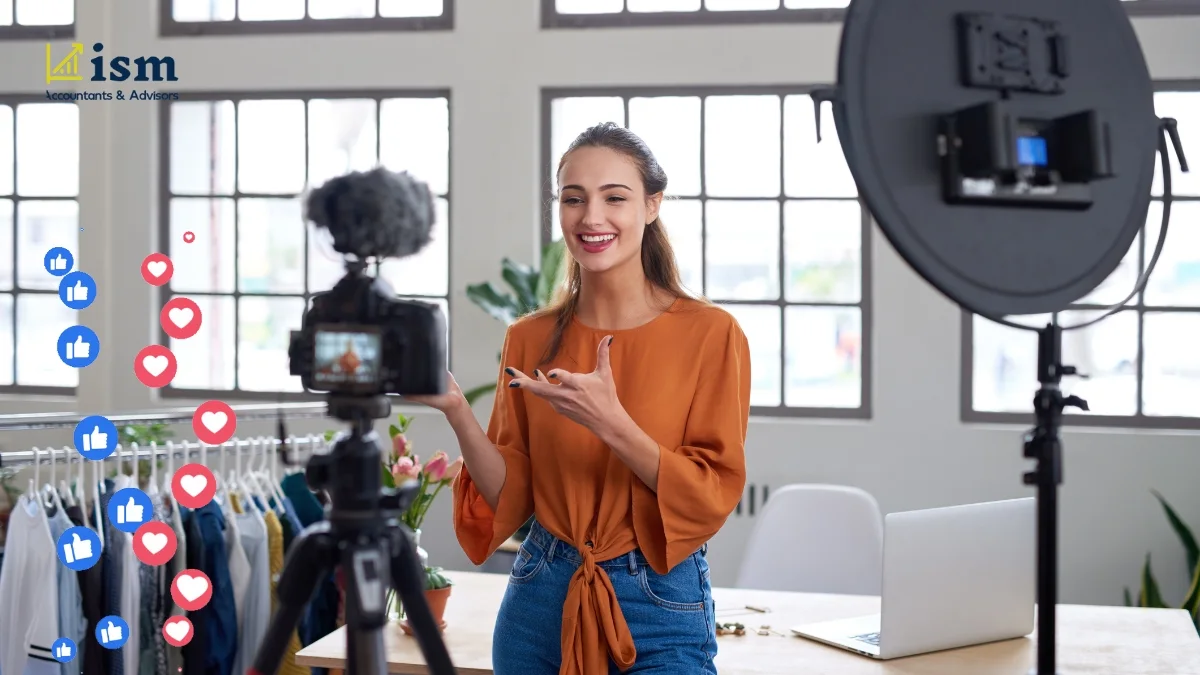
They can be. Influencers don’t always get paid in cash. A product, free service, or other benefit from a brand can also have tax implications, depending on why you received it.
When Can a Free Product Be Treated as Income?
The ATO treats being paid in goods or other benefits as a bartering transaction. Keeping an outfit from a sponsored post, or getting sent a “gifted” product, can land in that category.
If the item came your way because of your content, its market value can count as assessable income, contract or no contract. What matters is why you got it and whether you were meant to keep it.
A genuine gift from family with nothing to do with your content is different. A product a brand sends because of your platform generally isn’t.
What About Brand Deals and Sponsorships?
Cash for sponsored posts, ongoing collaborations, affiliate commissions, and platform income are all assessable, same as any other business income. Gifted products and brand payments both add to that income, which is also the pool your deductions get measured against, so good records on both sides make the return easier to defend.
Not sure whether a gifted product or brand payment needs to be included in your tax return?
ISM Accountants & Advisors can help you understand how your creator income and non-cash benefits may be treated for tax purposes. Get professional taxation service advice before lodging your return.
What Expenses Can Bloggers and Influencers Not Claim?
Not every expense connected to your content is deductible. Personal costs stay personal, even if you use them in a post, video, or photoshoot. Some of the common expenses you need to leave out are:
- Everyday clothing and grooming: Jeans, a T-shirt, and a haircut none of it is deductible just because it’s on camera.
- Private meals and entertainment: Everyday meals and personal nights out stay private, camera or no camera.
- Personal travel and holidays: The private part of a mixed trip, or a holiday with no real business reason, isn’t deductible.
- Everyday lifestyle spending: Personal purchases with no real link to your income sit outside the deduction rules, no matter how much they feel part of the “brand”.
Learn more about the rules around tax deductions without receipts and when other evidence may be accepted.
What Tax Records Should Bloggers and Influencers Keep?
Keep the records that show what you spent and what it was for. If you’re claiming part of an expense, you also need something to show how you worked out that amount.
- Receipts and invoices for everything you claim
- The date, amount, and reason for each expense
- Your business-use percentage for mixed-use items, and how you worked it out
- Travel records like an itinerary or diary for trips with a business leg
- A note of gifted products and their rough market value
- Income records from every platform and brand, not just your biggest one
- Digital copies you can actually find again later
The ATO generally expects records to be kept for five years from when you lodge. Buy a $250 ring light, keep the receipt, jot down “used for sponsored content filming, 100% business”, and you’ve got what you need if it’s ever queried.
What Are the Common Tax Mistakes Bloggers and Influencers Make?
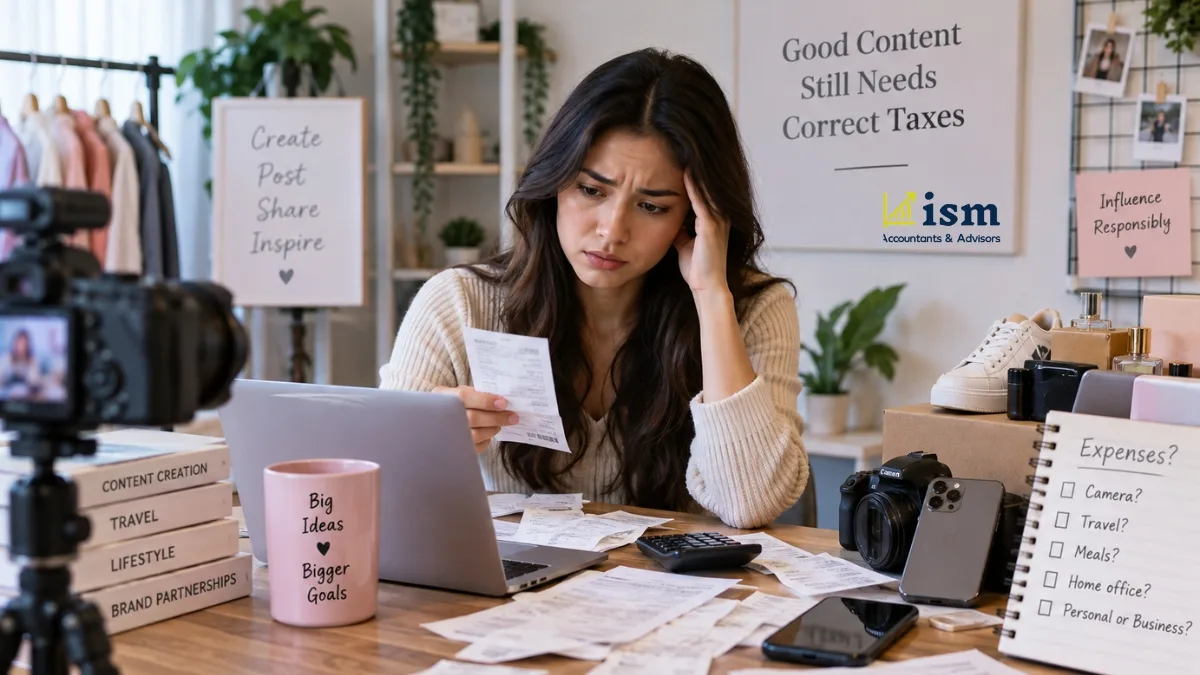
A few mistakes come up again and again. Claiming personal costs, taking the full amount of a mixed expense, and not keeping proper records are some of the big ones.
- Treating the account as a hobby without checking it against the business signs
- Claiming the full cost of a mixed-use item instead of the business share
- Forgetting gifted products counts as income
- Claiming personal lifestyle costs because they showed up in a post
- Not keeping receipts and relying on bank statements alone
- Assuming any camera, phone, or laptop is fully deductible the moment you buy it
- Mixing business and personal spending through the same account
- Using a made-up percentage instead of working out actual business use
When Should You Speak to an Accountant?
Some of this you can handle yourself. Other situations are worth a proper conversation, particularly if:
- You’ve got income from several platforms or brand relationships
- You’ve had a big brand deal or campaign this year
- You’ve received gifted products and aren’t sure how to value them
- Your income includes overseas platforms or international brands
- You’ve bought expensive equipment or other assets
- You genuinely don’t know if you’re a business or a hobby
If you earn income from blogging, YouTube, Instagram, TikTok, affiliate marketing or brand collaborations, understanding your tax obligations can help you claim eligible deductions correctly. For help with your individual tax situation, explore our personal income tax advice in Perth.
Final Thoughts
Tax deductions for bloggers and social media influencers in Australia are real, as long as the spending genuinely connects to your income and you can back it up. Not everything that ends up in a post qualifies, and mixed-use costs need to be split, not claimed whole.
Gifted products and brand deals add another layer, since they can be income even without cash changing hands. Get the business-versus-hobby call right, keep decent records as you go, and the rest of tax time takes care of itself.
Not sure how these rules apply to your own creator income and expenses? Contact ISM Accountants to discuss your tax situation and get advice before lodging your return.
FAQs
Can bloggers claim tax deductions in Australia?
Yes, if the blog is run as a genuine income-producing activity, with expenses connected to income and backed by records.
Can influencers claim their phone and internet on tax?
Only the business portion. Since most people use the same phone and plan for personal life, the bill has to be split based on actual use.
Are free products received by influencers taxable?
Often, yes. The ATO treats products received because of your content as a bartering transaction, so their market value can count as assessable income.
Can influencers claim camera and video equipment?
Yes, for the portion used in the business. Cheaper items are often claimed in full straight away; pricier gear may need to be depreciated or split for personal use.
Can I claim expenses if blogging is a hobby?
Generally no. A hobby usually has no deduction entitlement, and the income itself may not be taxed either.
How long should influencers keep tax records?
Influencers should keep tax records for five years from the date you lodge, as a general rule, covering receipts and the calculations behind a claim.