
To handle a tax audit in Australia, stay calm and read the notice carefully. Collect and organize all your important financial papers, and get help from an accountant or tax agent if you need it. Work with the ATO during the audit, explain things clearly, and after the audit, look over the results, fix any problems, and appeal if necessary.
Even though an audit can feel scary, knowing how it works and following a step-by-step plan can make it easier. The audit usually has three stages: responding right away, going through the examination, and resolving things after the audit. This guide explains each step so you can follow the rules, stay less stressed, and protect yourself.
What is Tax Audits in Australia?
A tax audit is an official review conducted by the Australian Taxation Office (ATO) to verify that your tax returns and financial records are accurate and compliant. Audits can be routine or triggered by discrepancies, unusual activity, or random selection. Both individuals and businesses may face audits, and the key to success is preparation, organisation, and knowing your rights.
It involves the ATO examining your financial records, tax returns, and supporting documents to confirm compliance. It aims to detect errors, discrepancies, or omissions and ensure the correct amount of tax is paid. Audits can be routine or triggered based on specific risk factors.
Recommended Read: Importance of Tax Planning in Australia
Who Can Be Audited by the ATO?
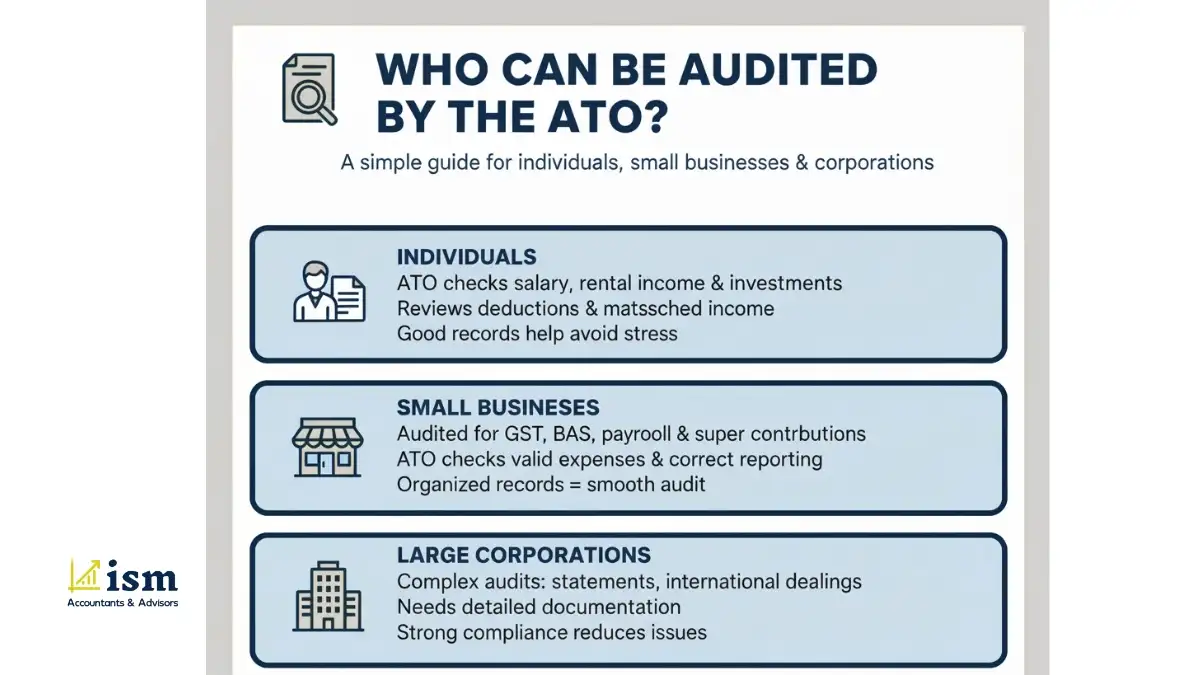
The Australian Taxation Office (ATO) can audit people, small businesses, and big companies. Audits are done to make sure everyone follows the law and reports their income and expenses correctly. Knowing who can be audited and what auditors look at can help you handle a tax audit well and feel less stressed during the process.
- Individuals: People are usually audited for their income tax returns. The ATO may check salary, investment income, rental properties, and any deductions you claimed. Audits often happen if there are unusual deductions, differences in reported income, or big transactions that don’t match your tax records. Knowing this helps individuals handle a tax audit by being prepared.
- Small Businesses: Small businesses are often audited for GST, payroll, BAS statements, superannuation contributions, and overall financial reporting. The ATO checks if records are correct, expenses are valid, and tax rules are followed. Being prepared helps small businesses handle a tax audit without problems.
- Large Corporations: Big companies may have more complicated audits covering financial statements, international transactions, and tax planning. These audits can involve many departments and need detailed papers to show they are following the rules. With the right plan, corporations can handle a tax audit confidently.
By knowing who can be audited and what is checked, you can get the right documents ready, ask for professional help from ISM Accountants, and respond confidently if an audit happens.
Step-by-Step Guide to Handle a Tax Audit in Australia
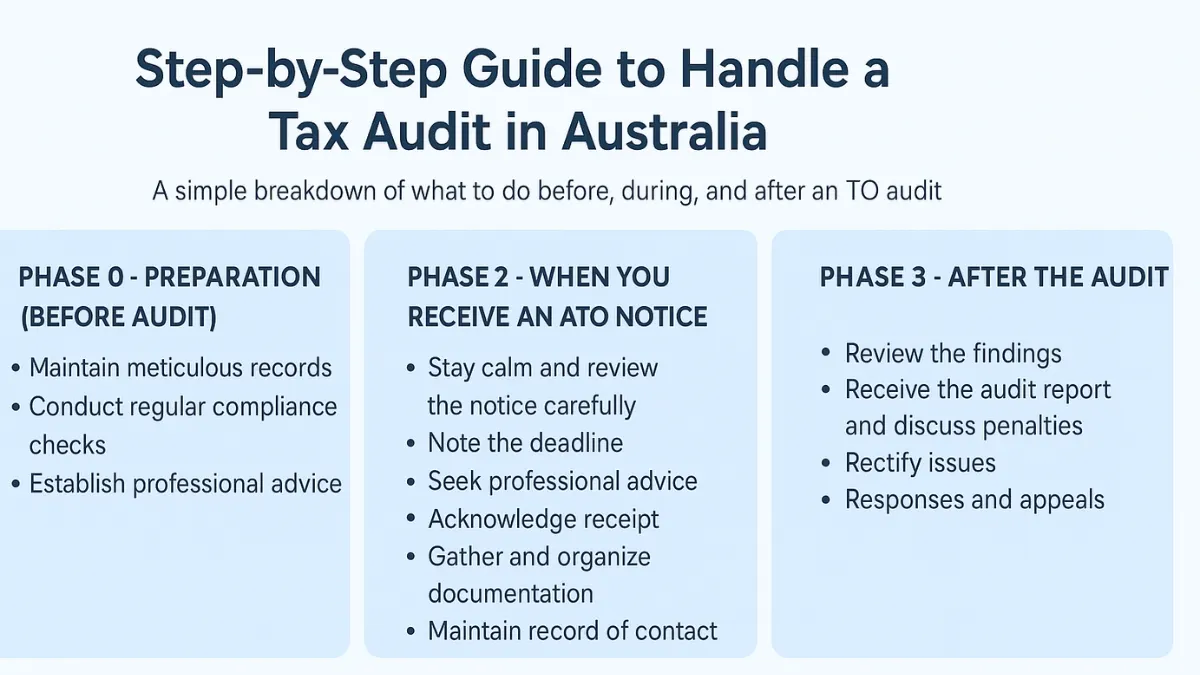
Handling a tax audit in Australia can feel overwhelming, but breaking it down into clear steps makes it manageable. The process can be divided into three phases: preparation before the audit, immediate response upon receiving a notice, and post-audit procedures.
Phase 0 – General Preparation (Before an Audit)
Preparation is key to a smooth audit and can save time, stress, and potential penalties.
- Maintain Meticulous Records
Keep accurate records of receipts, invoices, bank statements, and financial reports for at least five years. Using accounting software helps organise and digitise your records, making it easy to find documents during an audit.
- Conduct Regular Compliance Checks
Perform internal audits quarterly or biannually with a compliance checklist. Focus on areas like GST, superannuation contributions, and other obligations to identify and fix potential issues early.
- Establish Professional Advice
Work with a reputable accountant or tax advisor like ISM Accountants before an audit occurs. Their guidance ensures compliance and helps you respond correctly if the ATO contacts you.
Phase 1 – Immediate Steps Upon Receiving an Audit Notice
Receiving a notice from the ATO requires quick and organised action.
- Stay Calm and Review the Notice Carefully
An audit notice doesn’t automatically mean you’ve done something wrong. Read it carefully to understand the scope, audit period, and requested documents.
- Note the Deadline
Check the response deadline and start preparations immediately. If more time is needed, request an extension politely and professionally.
- Seek Professional Advice
Contact your accountant or tax advisor promptly. They can guide you on your rights, obligations, and the next steps.
- Acknowledge Receipt
Confirm receipt of the audit notice with the ATO to show your willingness to cooperate.
- Gather and Organise Documentation
Collect all relevant records, such as income statements, balance sheets, bank statements, receipts, and tax returns. Ensure everything is complete and well-organised.
- Designate a Point of Contact
Assign a knowledgeable person, often your accountant or financial officer, to liaise with the ATO, ensuring clear and consistent communication.
- Maintain Records of Communication
Keep detailed copies of all correspondence, including emails, letters, and phone call notes, to avoid misunderstandings or disputes later.
Recommended Read: Tax Filing Deadline in Australia
Phase 2 – Navigating the Audit Process
During the audit, cooperation and professionalism are important.
- Attend the Initial Meeting
The ATO schedules a meeting to explain the audit scope, risk factors, and periods under review. They may also provide a timeline and point of contact.
- Cooperate Fully
Provide requested information promptly and maintain a professional and transparent attitude throughout the audit.
- Examination of Records
Auditors review your records and may request additional documents. If cooperation is insufficient, they can access records using formal powers or third parties.
- Provide Clear Explanations
Clarify discrepancies or unusual transactions with concise and justifiable explanations.
- Engage Professional Representation
A tax agent or accountant can represent you, ensuring your financial information is accurately presented and complex questions are handled properly.
- Ask for Clarifications
If a request is unclear, ask for clarification instead of guessing. Correct responses reduce risks and potential penalties.
Recommended Read: How to Reduce Taxable Income?
Phase 3 – Post-Audit Procedures
After the audit, it’s important to review the findings and take appropriate action.
- Review the Findings
The auditor provides a report outlining facts, discrepancies, and suggested amendments. Discuss these with your accountant or management team.
- Receive the Audit Report and Discuss Penalties
The audit report includes penalties and interest charges. Attend any final meeting to discuss possible reductions or remissions.
- Rectify Issues
Develop an action plan to fix identified issues. Update internal controls, record-keeping, and compliance processes, and monitor progress.
- Responses and Appeals
If you disagree with findings, you can appeal or request an independent review. Gather supporting documents and consult a tax professional or legal advisor to strengthen your case.
ATO Audit Checklist: What You Need to Prepare?

Preparing for an ATO audit can be stressful, but having a clear ATO audit checklist can make the process much easier. This checklist helps you stay organised, gather the right documents, and respond efficiently to the ATO.
Essential Items for Your ATO Audit Checklist
- Tax Returns – Include all relevant income tax returns for the years under review.
- Bank Statements – Keep statements for business and personal accounts covering the audit period.
- Invoices and Receipts – Ensure all sales, purchases, and expenses are documented with receipts or invoices.
- Financial Statements – Prepare balance sheets, income statements, and cash flow reports.
- GST and BAS Records – Include GST returns, BAS statements, and related supporting documents.
- Payroll and Superannuation Records – Keep employee payment records and super contributions accurate and up-to-date.
- Correspondence with ATO – Maintain copies of any letters, emails, or notices from the ATO.
Using this ATO audit checklist ensures you are fully prepared and can handle a tax audit confidently. Working with a professional accountant like ISM Accountants can also help you organise these documents correctly and guide you through the audit process.
Partner with ISM Accountants for a Stress-Free Tax Audit
A tax audit can feel overwhelming, especially if it’s your first time. ISM Accountants are here to guide you through every step, helping you handle a tax audit efficiently, stay compliant, and avoid unnecessary stress.
- Personalised Advice – They look at your situation and give clear guidance on how to respond to the ATO.
- Organised Records – ISM Accountants help you collect, review, and organise all the documents you need.
- Professional Representation – They can talk directly with the ATO for you, making sure your responses are correct and professional.
- Reduce Stress and Risk – With their help, you can avoid mistakes, prevent penalties, and follow tax rules properly.
Working with ISM Accountants gives you the guidance, confidence, and support to handle a tax audit smoothly. You can also learn more about the other services we offer.
In Summary
Facing a tax audit in Australia can feel stressful, but knowing how to handle a tax audit properly makes the process much easier and less scary. Staying organised, keeping accurate records, and getting professional help are the main things that make an audit easier to manage.
Contact ISM Accountants for expert advice to guide you through every step. If you understand the audit, from getting ready, responding to the notice, cooperating during the review, to dealing with post-audit findings, you can reduce stress, follow the rules, and protect your finances.
FAQs About Handling a Tax Audit in Australia
It usually takes between 3 and 12 months. It depends on how complicated your records are and how much the auditors need to check.
You need things like tax returns, bank statements, receipts, invoices, income statements, and balance sheets for the time they are checking. Having everything ready and organised makes it much easier.
Yes! Hiring an accountant like ISM Accountants really helps. They know what to say, which documents to give, and they can make the whole process less stressful.
You can ask for a review or appeal. Make sure you have all the documents to support your case and get advice from an accountant or tax expert.
Keep your records accurate, check your compliance regularly, and work with a trusted accountant. This way, the ATO is less likely to check you again.
You should at least confirm that you got it. If you need more time to collect documents, you can politely ask for an extension.
They can help you with every step. They organise your documents, talk to the ATO for you, and make sure everything is done correctly so you don’t have to worry.