
An Australian Company Number (ACN) is a nine-digit code that ASIC gives to every company registered in Australia. It comes from the Corporations Act 2001. Think of it as your company’s legal fingerprint, it shows up on all official, financial, and legal documents.
Before ACN, companies were mostly identified by name. That caused a lot of confusion because businesses could have really similar names. The ACN procedure fixes that. Each company gets its own unique number that never changes, so there’s no mix-up in legal or financial records.
Here’s what makes an ACN special:
- It has nine digits
- It’s unique to the company
- It stays with the company forever
- It can’t be transferred or reused
Once a company has its ACN, that number is permanent.
At ISM Accountants, we help business owners register their companies and meet compliance requirements. This guide explains ACN meaning, who needs it, how it works, how to obtain ACN, and the legal responsibilities. It also touches on ACN vs ABN, so you know the difference.
Who Needs an ACN?
Whether your business needs an ACN really comes down to its legal setup under Australian corporate law. Getting this right matters for compliance, taxes, and planning ahead.
1. Companies: ACN Required
If your business is set up as a company, like a proprietary limited company (Pty Ltd) or a public company, you have to have an ACN. It’s not optional.
Companies are seen as their own legal entities under the Corporations Act 2001. Basically, this means the company exists independently of its shareholders and directors. The ACN is like the company’s ID card; it links your business straight to the Australian Securities and Investments Commission (ASIC) register.
You’ll use your ACN on all the official stuff, contracts, invoices, and any corporate papers, to show your company is legit. It also makes things more transparent because investors, creditors, and business partners can look you up on the ASIC register, which really helps build trust.
This matters a lot if you’ve got a public company or a proprietary company with several shareholders. At the end of the day, having that ACN just makes everything look more legit.
Recommended Read: Xero vs Myob vs Quickbooks
2. Sole Traders, Partnerships, and Trusts: ACN Not Required
Businesses operating as:
- Sole traders
- Partnerships
- Trusts
generally do not require an ACN. These structures are not recognised as separate legal entities in the same way as a company. Instead, they go with an Australian Business Number (ABN) for stuff like taxes, invoicing, and general identification.
For corporate trustees, if a trust has one, that trustee is actually a registered company on its own and needs an ACN. This setup lets the trustee company follow ASIC rules properly while keeping its legal identity separate from the trust’s beneficiaries.
Why Structure Matters?

Picking the right business structure really does make a difference because it affects a lot of things in how your business runs day-to-day and in the long run.
- Personal liability: If your business is set up as a company, shareholders usually don’t have to worry about their personal stuff, your house, savings, or car are generally safe.
But if you’re running things as a sole trader or in a partnership, you could be personally responsible if debts pile up or something goes wrong. Basically, your personal finances are tied to the business, which can get risky. - Taxation: Companies, trusts, and partnerships all get taxed differently. Having a company with an ACN opens doors to corporate tax rates and some perks that aren’t available to other setups.
- Compliance obligations: Companies have more rules, ASIC reporting, keeping proper records, and governance stuff. Sole traders and partnerships don’t have as much red tape, which is easier but comes with trade-offs.
- Long-term strategy: Getting incorporated and having an ACN can actually help your business look more legit to investors, make it easier to get funding, and just generally support growth over time.
Basically, knowing who needs an ACN and why helps you make smarter choices, stay out of trouble, and set up your business for the long haul. Talking to experienced accountants or corporate advisors, like ISM Accountants, can make sure your business is structured the right way from the start.
Recommended Read: Nepali Tax Accountant in Perth
Why the ACN System Exists and Its Importance?
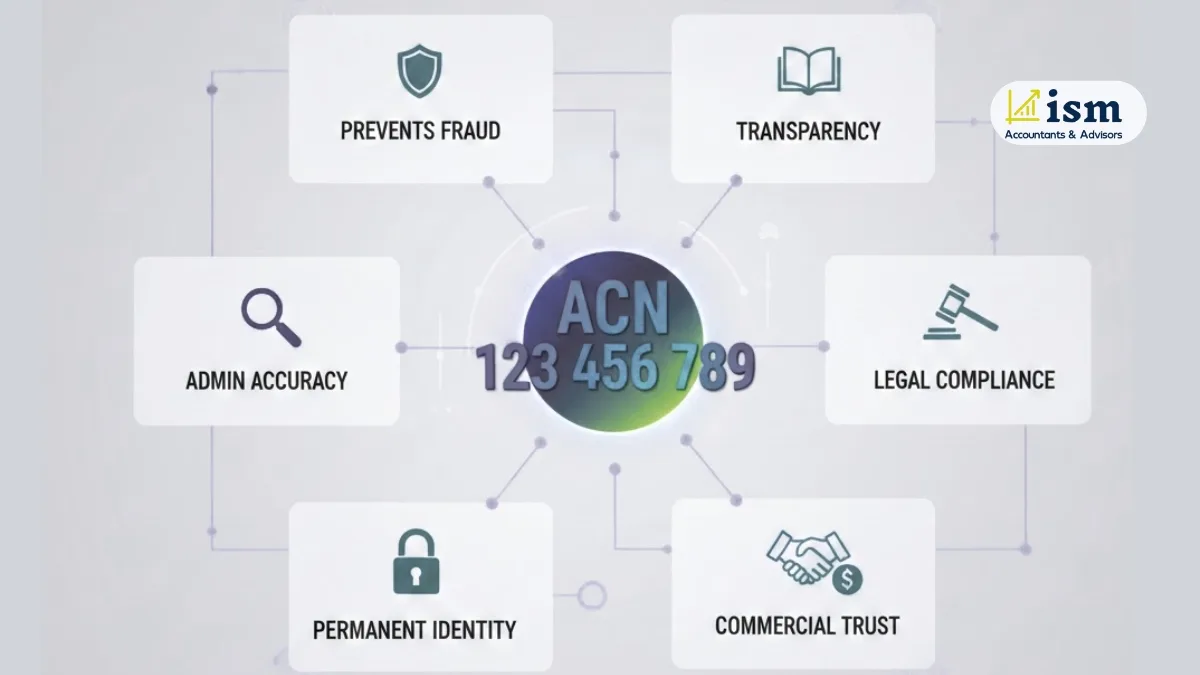
The Australian Company Number (ACN) system was set up to make Australia’s corporate world more trustworthy. It’s all about keeping things transparent, lowering business risks, and helping regulation run smoothly.
Every registered company gets its own unique number, which protects both the business itself and the wider public.
Preventing Fraud and Misrepresentation
Before ACNs, companies could have names that were almost the same, or even identical. That made it pretty easy for shady operators to trick customers, lenders, suppliers, and anyone else dealing with them.
The nine-digit ACN changes all that. It gives every company a unique identity, making it much harder for fraudsters to pretend they’re a legitimate business and reducing mistakes in business dealings.
Supporting Administrative Accuracy
Regulators, courts, banks, investors, and suppliers all rely on precise identification of legal entities. By linking a company to a single, unique number, the ACN ensures that:
- ASIC filings are correctly matched to the right company
- Legal documents reference the appropriate corporate entity
- Financial and statutory records are consistent and traceable
This level of administrative clarity is essential for legal compliance, financial reporting and corporate governance.
Maintaining a Permanent Corporate Identity
One of the most important features of an ACN is its permanence. Once issued:
- The ACN stays the same even if the company changes its name
- It does not change when directors or shareholders change
- It remains unchanged if the company relocates its registered office
- It persists through internal structural changes
If a company is deregistered, the number is permanently retired and will not be reissued to another entity. This guarantees that corporate identity remains consistent over time and can always be accurately referenced.
Recommended Read: Difference Between Tax Agent and BAS Agent
Enhancing Corporate Transparency
The ACN system actually makes things way more transparent in the Aussie business scene. Anyone can just hop onto the Australian Securities and Investments Commission register, punch in a company’s ACN, and see details like its current status, registered office, and who’s running the show.
It’s simple, but it builds a lot of trust between businesses, investors, and the public, and honestly, it just makes decision‑making a lot less stressful.
Enabling Legal and Regulatory Compliance
An ACN is also super important for staying on the right side of the law under the Corporations Act 2001. You’ll find it on all the key documents, like:
- Company letterheads and websites
- Financial statements
- Tax forms and ASIC lodgements
- Contracts and official correspondence
Skip putting it where it belongs, and you could face penalties or other regulatory headaches. So really, the ACN isn’t just a number; it’s what keeps a business compliant and legit across corporate Australia.
Supporting Financial and Commercial Confidence
For lenders, insurers, or big clients, seeing that ACN is like seeing a seal of credibility. It says, “Yep, this company is registered, regulated, and accountable.”
It proves the business is recognised under Australian law and follows proper corporate governance rules. That reassurance can make it way easier to get loans, attract investors, and build solid partnerships.
ACN vs ABN: Understanding the Difference
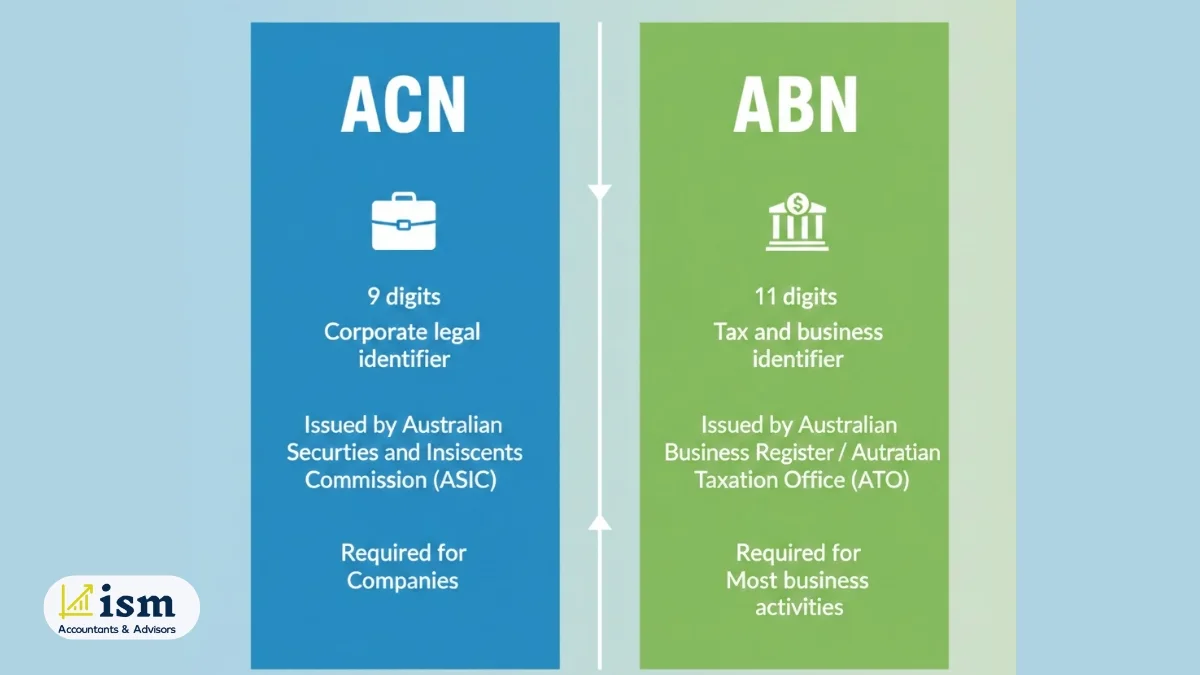
A lot of business owners get mixed up and think the ACN and ABN are the same thing. They’re connected, but they actually do different jobs, and each one has its own role in the business world.
Feature | ACN | ABN |
Number of digits | 9 digits | 11 digits |
Purpose | Corporate legal identifier | Tax and business identifier |
Issued by | Australian Securities and Investments Commission (ASIC) | Australian Business Register / Australian Taxation Office (ATO) |
Required for | Companies | Most business activities |
ACN (Australian Company Number)
The ACN is really about corporate law. It proves that a company is officially registered under Australian law and forms part of its formal identity. You’ll need it on certain corporate documents to show you’re following the Corporations Act 2001.
ABN (Australian Business Number)
The ABN is more of a general business number used for taxes and admin stuff. You need it for things like:
- GST registration
- Tax reporting
- Issuing tax invoices
- Dealing with government agencies
Here’s a handy tip: for companies, the last nine digits of the ABN usually match the ACN. That makes compliance a bit simpler, but it doesn’t mean the two numbers are the same thing.
So, if a company puts its ABN on official documents and that ABN includes the ACN, it usually covers the legal requirement to show the ACN. But at the end of the day, the ACN is the number that really defines the company legally for ASIC and corporate law purposes.
Recommended Read: Difference Between TFN and ABN
Where Must a Company Display Its ACN?
In Australia, companies are legally expected to show their ACN on certain documents. It might sound a bit formal, but really, it’s just about making sure everyone knows exactly which company they’re dealing with. When it’s displayed correctly, it keeps things transparent, avoids mix-ups, and helps the company stay on the right side of the law.
Documents Where an ACN Must Be Displayed
You’ll need to put your ACN on official and public documents, including:
- Invoices
- Receipts
- Statements of account
- Public documents
- Official company notices
- Company letterheads
- Purchase orders
- Contracts
- Cheques and bills of exchange
- Documents lodged with ASIC
A couple of things to remember when you display it:
- Always put “ACN” in front of the number
- Format it in three groups of three digits, like this: ACN 123 456 789
Documents Where an ACN Isn’t Needed
Not everything needs it. For example, you don’t have to put your ACN on:
- Business cards
- With compliments slips
- Packaging or product labels
- General advertising (unless it’s for a specific legal offer)
- Machine-generated receipts
- Vehicles or TV ads
Honestly, it’s not a huge deal to get this right, but if you don’t, you could run into penalties under the Corporations Act 2001. So, double-check your key documents, it’s a simple way to stay compliant and make your company look professional at the same time.
Recommended Read: How to Set Up an ABN?
How to Obtain an ACN?
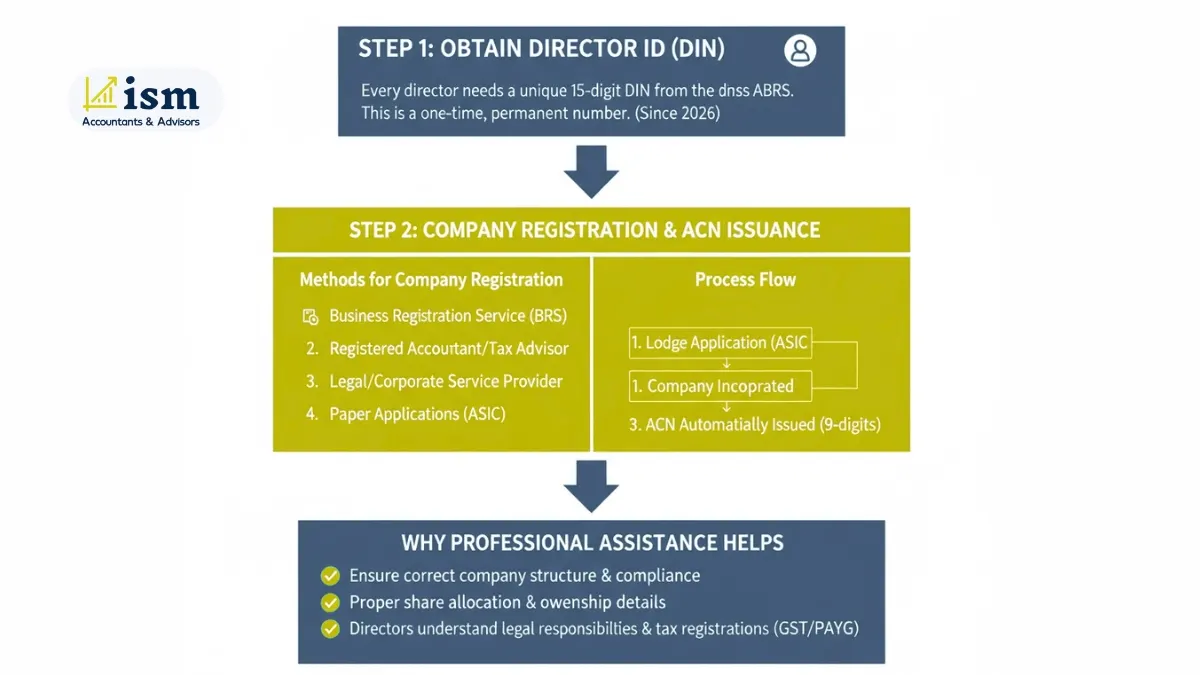
Here’s the thing, you don’t apply for an ACN on its own. It’s automatically issued when you register a company with the Australian Securities and Investments Commission (ASIC). Basically, the moment your company is officially incorporated, that unique ACN becomes part of its identity.
Since 2026, there’s one more step before you even get there: every director needs a Director Identification Number (DIN). This is a unique 15-digit number you get from the Australian Business Registry Services (ABRS), and yes, it’s a one-time thing that sticks with you forever. No DIN, no ACN, simple as that.
Methods for Company Registration
You can register a company (and get your ACN) in a few different ways:
- Through the Australian Government’s Business Registration Service (BRS)
- Using a registered accountant or tax advisor
- Going through a legal or corporate service provider
- Lodging paper applications directly with ASIC
Why Professional Assistance Helps?
Sure, you can do it all online yourself, but lots of business owners bring in an accountant or corporate advisor. And honestly, it makes life way easier. A professional can make sure:
- Your company structure actually fits your business goals and keeps you compliant
- Share allocations and ownership details are set up correctly
- Directors know their legal responsibilities under the Corporations Act 2001
- Tax registrations like GST and PAYG are done properly
Setting up a company might seem straightforward, but mistakes at this stage can be expensive to fix later. Getting qualified guidance doesn’t just simplify the process, it also saves you headaches, avoids compliance issues, and keeps your business on the right track from day one.
Ongoing Compliance Obligations for Companies with an ACN
Having an ACN isn’t just a one-and-done thing, it comes with ongoing responsibilities. Companies need to stay on top of regulatory obligations to keep their legal status and avoid penalties from ASIC.
Updating ASIC Within 28 Days
Companies must let ASIC know within 28 days if certain changes happen, like:
- A director is appointed or resigns
- Changes in share structure
- Updates to the registered office
- Changes to the principal place of business
Miss a deadline, and fees apply. In 2026, late updates range from $98 (up to one month late) to $411 (over one month late).
Annual Review Requirement and Fees (2025–2026)
Every year, ASIC sends out an annual statement. Companies need to:
- Check that all company details are correct
- Update any wrong information
- Pay the annual review fee
Here’s the 2025/26 fee breakdown:
Service / Fee | 2025–2026 Rate |
New Company Registration (Pty Ltd) | $611 |
Annual Review Fee | $329 |
Late Lodgement (Under 1 Month) | $98 |
Late Lodgement (Over 1 Month) | $411 |
Solvency Resolution: A Critical 2026 Requirement
From 2026, directors must pass a formal Solvency Resolution within two months of the annual review. This basically confirms that directors genuinely believe the company can pay its debts as they fall due. Skip this, and it’s considered a compliance breach, which could draw ASIC attention.
ASIC’s 2026 Enforcement Priorities
ASIC is stepping up in 2026, especially around Financial Reporting Misconduct. Key focus areas:
- Companies failing to lodge financial reports
- Companies not keeping accurate registry details
- Court action against repeated non-compliance, even for small businesses
Basically, if a company keeps missing updates, not paying fees, or failing to report officeholder changes, ASIC is likely to take notice.
Deregistration Risks
One of the main reasons ASIC deregisters companies is failing to pay the annual review fee for more than 12 months. Deregistration is serious:
- All company property, including bank accounts and assets, automatically vests in ASIC
- Reinstating a deregistered company is complicated and expensive
2026 Compliance Checklist
Requirement | Deadline | 2026 Penalty if Late |
Update company changes with ASIC | Within 28 days | $98 – $411 |
Annual Review Fee | 2 months after anniversary | $98 – $411 |
Solvency Resolution | 2 months after anniversary | Regulatory non-compliance |
Staying on top of ASIC obligations in 2026 is all about diligence. Keep your company records updated, pay fees on time, and pass that Solvency Resolution, and you’ll protect your company’s legal standing, avoid penalties, and steer clear of deregistration headaches.
Recommended Read: Professional Tax Consultant
Why Proper Advice Matters for Your ACN?
Getting a company registered isn’t just about having an ACN. Honestly, it’s about setting things up right from the start so your business can run smoothly, stay out of trouble, and grow without headaches. Pick the wrong structure or miss a few steps, and you could end up with problems later, for both directors and shareholders.
Your setup touches a lot more than you might think:
- Asset protection: You don’t want your personal stuff at risk if the business hits a rough patch.
- Director responsibilities: It’s important to know what you’re legally responsible for under the Corporations Act 2001.
- Taxes: Staying on top of corporate tax, GST, and PAYG helps you avoid surprises.
- Profit sharing: Making sure profits are shared fairly among shareholders.
- Future planning: Preparing for growth, ownership changes, or even selling the business smoothly.
At ISM Accountants, we make all of this a lot less stressful. We’ll guide you through registering your company, keeping up with ASIC reporting, picking a structure that actually works, and making sure you stay on the right side of the law.
The goal is simple: set up your company properly so it’s compliant, ready to grow, and so you can actually focus on running your business instead of worrying about paperwork or legal issues.
Final Thoughts
An ACN isn’t just some random nine-digit number. It’s basically your company’s legal ID in Australia and plays a big role in keeping things compliant, transparent, and credible.
If you’re running a company, you’ve got to have one. And if you’re thinking about incorporating, it’s worth knowing what you’re signing up for, the legal responsibilities, ongoing compliance stuff, and all the corporate obligations that come with holding an ACN.
Getting advice before you register can save you a lot of headaches, and money, later on. With the right guidance, your ACN isn’t just a number. It’s the foundation for a business that’s legit, credible, and ready to grow. That’s where ISM Accountants can step in and help. Contact Today!
FAQ
Nope. An ABN (Australian Business Number) and an ACN (Australian Company Number) are different. The ABN is an 11-digit number used to identify your business to the government and the public, while the ACN is a 9-digit number given specifically to companies when they register under the Corporations Act.
An ACN uniquely identifies a company as a legal entity. You’ll see it on all official company documents, like:
- Invoices and receipts
- Business letterheads
- Official notices
- Cheques and bills of exchange
The main point of an ACN is to make sure your company can be clearly identified in the Australian market. It stops confusion between companies with similar names and lets the public track a company’s history and filings through ASIC.
ASIC (Australian Securities and Investments Commission) is the government body that regulates companies and financial markets. The ACN is just the unique number ASIC gives a company when it’s successfully registered.
Yes, generally you still need an ABN if you’re running a business. The $75,000 figure is really about GST, if your turnover is below that, you don’t have to register for GST, but you can still have an ABN.
Technically, yes, but only if you’re setting up a company. That means appointing directors, having at least one shareholder, and keeping up with reporting obligations under the Corporations Act. It’s not for sole traders who want to stay unincorporated.
For 2026, registering a proprietary company, the most common type, costs $611. Plus, there are ongoing annual review fees to keep your ACN active.
An ACN isn’t a type of business. It’s just a registration requirement for companies. Seeing “ACN” on a business document usually means it’s a separate legal entity, like a Pty Ltd, not a sole trader or partnership.
An ACN isn’t a type of business. It’s just a registration requirement for companies. Seeing “ACN” on a business document usually means it’s a separate legal entity, like a Pty Ltd, not a sole trader or partnership.
ACN comes first. You register your company with ASIC to get your ACN, and then you can apply for an ABN using that ACN.