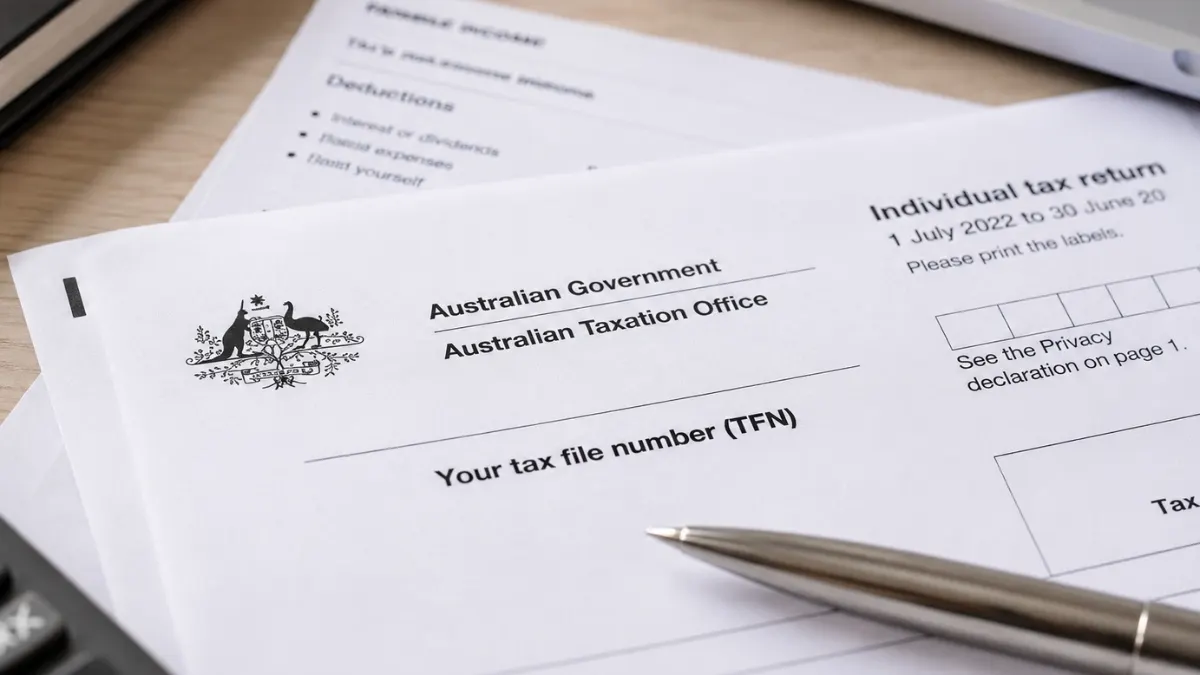

If you’ve recently started working in Australia, moved here on a visa, or just launched a business, someone has probably already asked you, “Do you have a TFN?” And if you’re not sure what that means or why it matters, you’re not alone.
A tax file number Australia relies on to track individual and business income is one of the first things you’ll need to sort out. Without one, you’ll end up paying more tax than necessary and dealing with more admin headaches than you need.
This guide breaks down who needs a TFN in Australia, the main benefits of TFN, what happens if you don’t have one, and how to actually apply. No jargon, just practical info.
Quick Review
- A TFN is a unique tax number used in Australia for work, tax, and financial records.
- Employees, students, freelancers, investors, and business owners usually need one.
- Without a TFN, you may pay much higher tax on your income.
- A TFN helps with tax returns, superannuation, and government benefits.
- Most people can apply online through the ATO website for free.
What is a TFN and Why Is It Important?
A Tax File Number is a unique nine-digit number issued by the Australian Taxation Office (ATO). It’s yours for life. You keep the same number whether you change jobs, move states, or switch from employee to business owner.
The ATO uses it to match your income records, track your tax lodgements, and manage refunds. Banks, employers, super funds, and government agencies all ask for it because it’s the main identifier that connects your financial activity in Australia.
Without a TFN, you can still earn income. But the tax withheld from that income will be much higher than it should be. So getting one sorted early is a smart financial move.
If you want a broader overview of how Australian tax obligations work for individuals and businesses, our guide on Australian tax laws is a good starting point.
Who Needs a TFN in Australia?
Basically, if you’re earning income in Australia in any form, you need a TFN. That includes employees, students, freelancers, investors, and business owners. Here’s a simple breakdown.
TFN for Employees and Job Seekers

If you’re starting a new job, your employer will ask you to fill out a form to declare your tax file number. This is how they know which tax bracket applies to your income.
Many people wonder, can I work without a TFN? Technically, yes. You can start working before you have one. But your employer is legally required to withhold tax at the highest marginal rate (currently 47%) if you haven’t provided your TFN within 28 days of starting. That’s a lot of money to lose from your pay.
So the smart move is to apply before you start, or at least in the first week. It protects your take-home pay from day one. Employers also need to manage payroll correctly once your TFN is on file. If you run a business with staff,
Payroll management services can help you stay compliant and process wages accurately every pay cycle.
TFN for International Students and Visa Holders
TFN for international students is one of the most searched topics we see, and for good reason. Students working part-time in Australia absolutely need a TFN. Without it, employers will withhold tax at the top rate, and you’ll lose a big chunk of every paycheck.
Most student visas come with work rights, and the ATO allows international students to apply for a TFN online once they’re in the country. You’ll need your passport and visa details, and the application is free.
You also need a TFN if you want to lodge a tax return at the end of the financial year. Most students overpay tax during the year and get a refund. But you can’t claim that refund without a TFN on file.
If you’re new to Australia and unsure how your visa affects your tax obligations, it’s worth getting proper advice. ISM Accountants regularly to help international students and visa holders understand their tax situation in Australia.
TFN for Sole Traders and Business Owners
If you’re running a business as a sole trader, your TFN and your business are treated as one and the same for tax purposes. You report your business income under your own TFN in your personal tax return.
Now, this situation is where people often get confused about TFN vs. ABN. A TFN is your personal tax identifier. An ABN (Australian Business Number) is what identifies your business to other businesses and the ATO for GST, invoicing, and business activities. Most sole traders need both.
If you’re earning income as a contractor or freelancer, the business paying you may withhold tax at the top rate if you don’t have an ABN and TFN on record.
Recommended Read: Our guide on how to set up an ABN in Australia walks through that process step by step.
TFN for Investors and Superannuation
If you have money in a bank account, shares, or a superannuation fund, your TFN matters here too.
Banks are required to withhold tax at the highest rate on interest earned if you haven’t provided your TFN. Same goes for investment income and dividends.
For superannuation, not providing your TFN to your super fund means your contributions may be taxed at 47% instead of the standard 15%. That’s a significant difference over a working lifetime.
If you’re an employer managing super contributions for your team, our superannuation for employers guide explains your obligations clearly.
So even if you’re not actively working, having a TFN registered with your financial institutions is a small admin task that can save you a lot over time.
What Are the Benefits of Having a TFN?

The benefits of TFN mostly involve paying the right amount of tax (not more), making your financial life run smoother, and unlocking access to things that require ATO verification.
Avoid Higher Tax Without a TFN
Higher tax without TFN is the most immediate consequence people run into. Without a TFN on file, employers, banks, and super funds all default to the highest possible tax rate, currently 47%, which includes the Medicare levy.
To put that in perspective: if you earn $2,000 in a pay period without a TFN lodged, you could lose $940 in withheld tax. With a TFN, you’d likely pay somewhere between $200 and $400 depending on your income. That’s the real-world difference.
Even if you eventually lodge a tax return and claim a refund, you’re essentially giving the ATO an interest-free loan. It’s not a great situation to be in.
Easier Tax Returns and Faster Refunds
Lodging your tax return is a lot easier when the ATO already has your income pre-filled from your employer’s Single Touch Payroll data. That all runs through your TFN.
It also means refunds come through faster. The ATO can match your identity, verify your income records, and process the return without needing to manually verify everything.
If you’ve overpaid tax during the year, that refund can be significant. Most employees and students who work part-time receive some benefits, but only if they lodge their tax returns and have a Tax File Number (TFN).
Not sure how to maximize your return? Our tax return services can help you lodge correctly and claim every deduction you’re entitled to.
Access to Superannuation and Government Benefits
Your TFN is the key that links you to your super fund. Without it, your employer’s super contributions still go in, but they get taxed at nearly 50%. Over years and decades, that results in a significant reduction in your retirement savings.
You also need a TFN to access various government support payments, including JobSeeker, Youth Allowance, and the ATO’s own myGov portal. Everything in the government system connects through your TFN.
Can You Work Without a TFN in Australia?
Yes, you can. There’s no law that says you must have a TFN before you start working. But the financial consequences arrive quickly.
Can I work without a TFN? You can, but if you don’t provide it within 28 days of starting a job, your employer must withhold tax at 47%. That’s the law. They don’t have a choice, and you can’t negotiate your way around it.
The same applies to bank accounts. If you open an account without providing a TFN, the bank will withhold tax at the top rate on any interest earned.
So, while technically you can work without a TFN, practically speaking, you should apply as soon as possible. The ATO processes most online applications within 28 days, and you can often sort it out quickly if you apply through the right channels.
If you’re a business owner trying to figure out the tax setup for new staff or contractors, our taxation services team can help you get started.
Who Is Eligible to Apply for a TFN?
Most people living and working in Australia can apply for a TFN. The ATO has specific application processes depending on your situation.
Australian Residents
If you’re an Australian citizen or permanent resident who has never had a TFN, you can apply online through the ATO’s website. You’ll need proof of identity, like a passport or Australian driver’s license. You can also apply in person at an Australia Post outlet if you prefer to do it face-to-face.
International Students and Visa Holders
If you’re in Australia on a temporary visa that includes work rights, you’re eligible to apply for a TFN. The ATO accepts applications from most student visa holders, working holiday visa holders, and sponsored workers. You’ll need to be physically in Australia when you apply, and you’ll need your passport and visa grant details ready.

Businesses and Sole Traders
If you’re registering a business in Australia, your TFN as an individual is required during the ABN registration process. The two registrations connect. Companies and partnerships apply separately using their own application processes through the Australian Business Register.
If your business is already registered and you need help with the ongoing tax and financial side, our business services team can assist you.
How to Apply for TFN in Australia?
Start at the ATO website. It’s free, and you should never pay a third party to apply on your behalf unless you’re using a registered tax agent.
Here’s the basic step-by-step process for most people:
- Go to the ATO website at ato.gov.au and navigate to the TFN application page
- Choose the right application type: individual, international student, or business
- Fill in your personal details: name, date of birth, address, and contact info
- Upload or verify your identity documents
- Submit the application and note your reference number
- Wait for your TFN to arrive by mail, or receive it via myGov in some cases
If you’re a new business owner applying for the first time, our detailed post on TFN for new businesses and the applying process covers the business-specific steps in more detail.
Final Thoughts
Getting a TFN is one of those admin tasks that doesn’t take long but makes a huge difference. Whether you’re a new employee, an international student picking up casual shifts, a sole trader, or someone setting up investments, having your Tax File Number Australia sorted early just removes a lot of stress.
The higher tax without a TFN issue is real, and it affects people more than they realise. A 47% withholding rate can significantly cut into your take-home pay or savings, and while you might eventually get a refund, it’s better to just avoid the situation altogether.
If you’re not sure where to start, or if your situation is a bit more complicated, maybe you’re on a specific visa type, running a business, or trying to sort out your super it genuinely helps to speak to someone who does this regularly.
Need help with your TFN, ABN, tax returns, or business registrations? ISM Accountants makes the process simple with practical advice and expert support tailored to your situation. Contact us now.
FAQs
A TFN, or Tax File Number, is a unique nine-digit number issued by the Australian Taxation Office. It’s used to manage your tax records and income reporting in Australia throughout your lifetime.
Employees, international students, sole traders, investors, and most people earning any form of income in Australia need a TFN to avoid paying the highest possible tax withholding rate.
Yes, technically you can. But if you don’t provide your TFN within 28 days of starting work, your employer is legally required to withhold tax at the highest marginal rate, currently 47%. It’s a costly situation to be in.
The main benefits of having a TFN include avoiding extra tax withholding, lodging tax returns more easily, receiving refunds faster, and ensuring your superannuation contributions are taxed correctly.
A TFN is your personal tax identifier used for individual income reporting. An ABN is your business identifier, used for invoicing, GST registration, and business-to-business transactions. Most sole traders need both.
You apply directly through the ATO website for free. You’ll need identity documents like a passport and, for visa holders, your visa grant details. Most applications are processed within 28 days.
Yes. International students working part-time in Australia need a TFN for salary payments and tax lodgements. Without one, employers will withhold tax at the highest possible rate from every paycheck.
Without a TFN on file, banks and employers are required by law to withhold tax at the maximum rate from your income or interest earnings. You may eventually reclaim some of these funds through a tax return, but it’s better to apply early and avoid the issue altogether.