
For people running a small business in Australia, staying on top of tax stuff is just as big a deal as actually making money. One of the best ways to legally pay less tax is by getting your tax deductions right. If you do it the right way, these deductions can really lower how much income you get taxed on, keep more cash in your pocket, and help your business grow over time.
Even so, a lot of businesses either miss out on things they’re allowed to claim or they do it wrong because they don’t really get what the Australian Taxation Office wants. Both of those things can end up costing you a lot of money.
This blog goes over the top 10 most common tax deductions for small businesses in Australia, how they actually work, what you’re allowed to claim (and what you aren’t), and how to follow the ATO rules.
If you need help that’s specific to your own business or industry, ISM Accountants offer professional tax and business services meant to help Australian small businesses get the most out of their deductions while following all the rules.
What Are Tax Deductions for Small Businesses?
Tax deductions are just costs a business can take away from the total money it made when filing a tax return. Doing this lowers the amount of income that gets taxed, which means you pay less tax in the end.
The ATO says a business cost can usually be claimed if it hits these points:
- The expense is directly linked to making money for the business.
- The business has already spent the money.
- The business keeps the right records to prove it.
If you spend money on something for both work and personal use, you can only claim the business part. Keeping good records and splitting the costs correctly is a big deal if you want to avoid fines from the ATO.
ISM Accountants help small businesses all the time to find deductions they can claim and make sure the math is right and backed up by the right papers.
What are the Top 10 Common Tax Deductions for Small Businesses in Australia?
The top 10 common tax deductions for small businesses in Australia are home office expenses, vehicle and travel costs, employee wages and superannuation, marketing and advertising, depreciation and asset write-offs, professional fees, software and technology, business insurance, interest on business loans, and operating expenses such as rent and supplies.
1. Home Office Expenses
A lot of small businesses in Australia work from home, either all the time or just part of it. If you do work stuff at home, you might be allowed to claim some of your house costs.
What You Can Claim
- Home office deductions usually cover things like:
- Electricity, gas, and water used while you’re working
- Internet and phone costs that have to do with work
- Value lost over time on office furniture and gear, like desks, chairs, computers, and screens
- The cost has to be directly about the part of your home you use for business.
How Home Office Expenses Are Calculated?
The ATO lets you use two main ways to figure this out:
- The fixed rate method, which gives you a set amount for every hour you work from home
- The actual cost method, where you figure out the exact percentage of each house bill that’s for work
Capital Gains Tax Considerations
Claiming things like rent or mortgage interest can lead to paying Capital Gains Tax when you sell the house. This is a big thing that business owners often forget about.
ISM Accountants can help you figure out if claiming home office costs is worth it or too risky, depending on your situation.
Recommended Read: Five Ways to Save Money on your Home Loan
2. Vehicle and Travel Expenses
Vehicle and travel expenses are among the most commonly claimed deductions for small businesses.
You may claim:
- Fuel and oil
- Vehicle servicing and repairs
- Registration and insurance
- Lease payments
- Parking fees and tolls
- Accommodation and meals for overnight business travel
Travel must be strictly business-related. Travel between home and work is generally not deductible.
Claiming Methods Approved by the ATO
The ATO allows two methods:
- The logbook method, which records business use over a continuous 12-week period
- The cents per kilometre method, which allows a fixed rate claim for up to 5,000 business kilometres per year
Choosing the correct method can significantly affect your deduction.
Recommended Read: Claiming Self Education Deduction in Tax Returns
3. Employee Wages and Superannuation
For businesses that have staff, the money you pay them and their super are big costs you can claim.
Wages and Salaries
Money you pay to employees is fully tax-deductible in the year you pay it. This includes salaries, wages, bonuses, and any extra allowances.
Superannuation Guarantee
Compulsory super payments can only be claimed if they are paid on time. Right now, the Superannuation Guarantee rate is 11.5 percent.
If you pay super late, you might have to pay fines and lose the chance to claim the deduction.
4. Marketing and Advertising Expenses
Money spent on marketing and advertising to promote your business and get customers is usually something you can claim.
These might include:
- Google Ads and paid search campaigns
- Social media advertising
- Making a website and paying for hosting
- Search engine optimisation services
- Business cards and flyers
- Signs
- Sponsorships and local ads
Marketing costs have to be directly about promoting your business or making money.
Recommended Read: How to Change Your Business Structure without Loosing Tax Benefits?
5. Depreciation and Asset Write-Offs
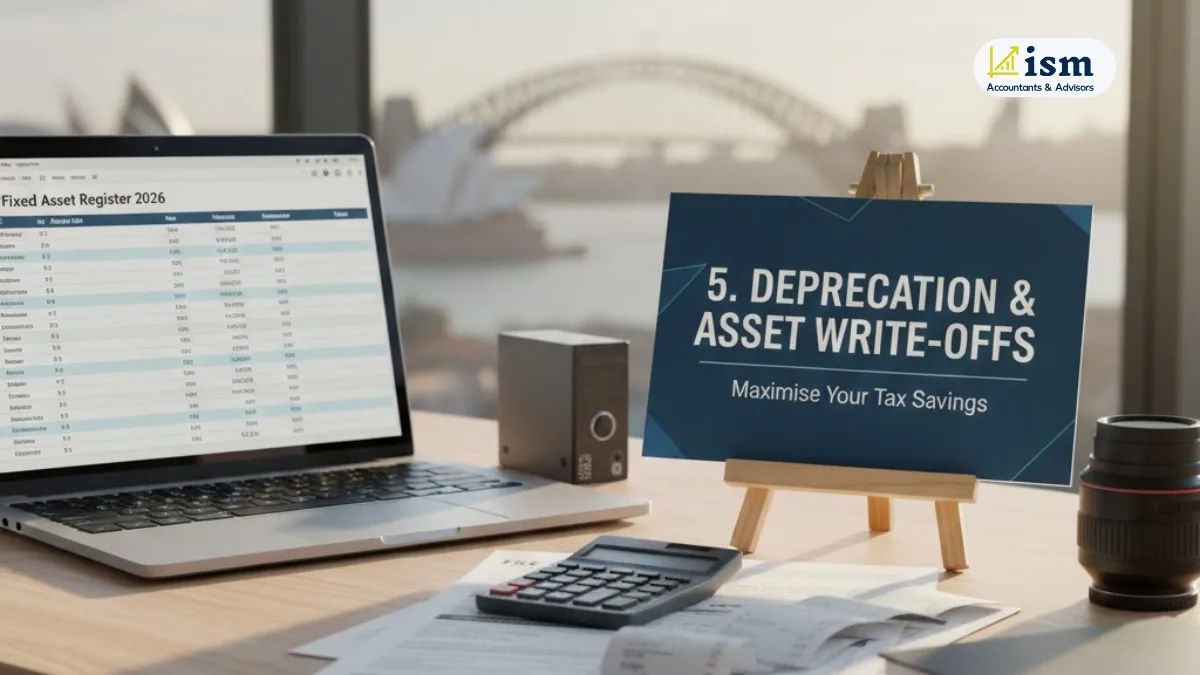
Things like machinery, cars, and tech are usually claimed over a long time instead of all at once. Depreciation spreads out the cost of an item over how long it’s expected to last, which shows how it wears out and gets older.
Instant Asset Write Off
Some small businesses might be allowed to claim the whole cost of certain things they bought and started using in the same financial year. This depends on the limits the government sets at the time.
Depreciation Methods
The two ways people usually do this are:
- Diminishing value, which gives you bigger deductions at the start
- Prime cost, which spreads the deductions out evenly over time
6. Professional Fees and Services
Professional services are a normal and necessary cost of running a business and are generally deductible. Personal legal expenses are not deductible. The claimable professional fees include:
- Accounting and tax return preparation
- BAS and GST lodgement
- Bookkeeping services
- Legal fees related to contracts or leases
- Business consulting and advisory services
7. Software and Technology Expenses
Most businesses today really depend on software and digital tools to handle money, talk to customers, keep things organized, and stay safe online. Since these tools are a must for running things every day, a lot of these tech costs are Common Tax Deductions for Small Businesses in Australia.
What You Can Claim
- You can usually claim the cost of software and tech used for work, including:
- Accounting software like Xero or MYOB for tracking money, pay, and reports.
- CRM systems that help you manage client info and sales.
- Project management tools used to plan and get work done.
- Cybersecurity and antivirus software to protect your systems and data.
Software you pay for monthly is usually deductible in the same year you pay for it, as long as it’s for work. If you use it for personal stuff too, you can only claim the business part. Just make sure to keep your receipts and records to back up your claim if the ATO asks.
Recommended Read: Effective Loan Management for Startups
8. Business Insurance
Having business insurance is a huge deal for protecting your gear, your income, and your legal side. Since insurance is just a part of keeping a business safe and running, most of the premiums you pay are Common Tax Deductions for Small Businesses in Australia.
Common Deductible Insurance Policies
- Small businesses can usually claim for insurance that’s directly linked to what the business does, such as:
- Public liability insurance to cover you if someone gets hurt or their stuff gets damaged.
- Professional indemnity insurance to protect you if you’re accused of making a professional mistake.
- Workers’ compensation insurance, which is a must if you have people working for you.
- Cybersecurity insurance to cover things like data leaks and online attacks.
- Business vehicle insurance for any cars or trucks you use for work.
You can’t claim insurance that’s just for your personal life. If a policy covers both work and personal stuff, you can only claim the business part. Make sure you keep good records of your policies and what you paid so you can back up your claim if the ATO asks.
9. Interest on Business Loans
When you borrow money to fund business activities, the interest charged on that borrowing is generally tax-deductible. This applies as long as the funds are used wholly or mainly for business purposes.
Applicable Finance Types
You can usually claim interest expenses on the following business finance arrangements:
- Business loans taken out to support operations, expansion, or asset purchases
- Overdraft facilities linked to your business bank account
- Lines of credit are used to manage cash flow or short-term expenses
- Business credit cards are used for day-to-day operational costs
Only the interest portion of loan repayments is deductible. The principal amount is not tax-deductible. If a loan or credit facility is used for both business and personal purposes, only the business-related interest can be claimed, and accurate records should be maintained to support the apportionment.
10. Operating Expenses (Supplies and Rent)
Operating expenses are just the daily costs it takes to keep your business going. You can usually claim these in the same financial year you paid for them. These costs have to be directly linked to how your business makes money.
Premises Expenses
- Small businesses can claim costs for the place they work from, like:
- Rent for an office, shop, or workshop
- Payments on a commercial lease
Business Supplies
- Costs for things you use up or materials used in the business can also be claimed, including:
- Stationery and office supplies
- Raw materials for making products or providing services
- Cleaning products to keep your workspace tidy
- Stock you bought to sell to customers
These things have to be used only for work. If you use something for personal reasons too, you can only claim the business part. Keeping good records of what you bought and saving your receipts makes sure you’re following the ATO rules and covers common tax deductions for small businesses in Australia.
Recommended Read: Can ATO Track ABN Income?
Bonus Deduction: Bad Debts
If a client fails to pay an invoice and reasonable efforts have been made to recover the amount, it may be written off as a bad debt.
To claim a bad debt:
- The income must have been previously declared
- The debt must be written off in your accounting records
- Genuine recovery attempts must have been made
Why Choose ISM Accountants for Tax Deduction?
Claiming tax deductions isn’t just about trying to claim every single thing you can; it’s about doing it the right way and following the law. If you claim things incorrectly, you could get hit with fines, audits, or miss out on deductions you actually deserve. That’s why getting professional help is a big deal.
ISM Accountants are experts at helping Australian small businesses get the most out of common tax deductions for small businesses in Australia while making sure everything follows the ATO rules. They help with things like:
- Small Business Accounting Services
- Loan Management
- Tax Returns Services
- Payroll Management
- Tax Planning and Compliance
- BAS and GST Services
- Payroll and Superannuation Support
- Business Advisory Services
The team at ISM Accountants works right alongside small businesses to lower tax legally, keep more cash moving through the business, and give you peace of mind that the ATO won’t have any issues with your claims.
Get in touch with ISM Accountants today to get the most out of your tax deductions, get your business money sorted, and make sure you’re following all the Australian tax laws.
FAQs
Tax deductions of small businesses help to cut your taxable income, thus reducing your overall liability to taxes. These include operating expenses such as office rent, employees’ wages, supplies, and professional services. You aim to maximize your tax savings and minimize your expenses. These deductions can significantly prove beneficial for your business’s financial success.
You can deduct some of your rent, mortgage, utilities, and internet if you use part of your home only for business. The IRS allows this deduction if the space is used regularly and exclusively for business. You can also claim a portion of other household expenses, like electricity and insurance. This is a valuable deduction for home-based businesses.
Yes, marketing and advertisement expenses like online advertisements, print media, and promotional events are deductible as business expenses. The expenses incurred should be directly related to promoting and generating business income. Advertisement is an important medium for growing any business, and deductions of this nature help the business minimize its tax liability. Keep all your receipts and documentation of such activities.
Vehicle expenses are deductible to the extent used for business. You can deduct gasoline, maintenance, insurance, and even lease payments. The IRS provides two options: you can use the standard mileage rate and report only miles driven or all actual car-related expenses. You should keep this detailed enough to support the correct amount for business use.
To ensure you get all deductions, keep thorough records of all business-related expenses and regularly review your spending. Work with a tax professional who can help identify additional deductions and ensure compliance with tax laws. Regular consultations can help you stay updated on new tax rules that may benefit your business. Staying organized and proactive will help you maximize your savings.
Tax deducted in Australia depends on your income, residency status, and tax rates. Higher incomes are taxed at higher rates, and most individuals also pay the Medicare levy.
The Common tax deductions include home office expenses, vehicle costs, wages, superannuation, marketing, depreciation, professional fees, software, insurance, loan interest, and operating expenses.
An Australian resident earning $80,000 takes home approximately $60,000 to $62,000 per year after income tax and Medicare levy.
If $1,200 is your only income, you generally pay little to no tax as it is below the tax-free threshold.
Yes. Tax deductions reduce your taxable income, which lowers the amount of tax you need to pay.
Not legally, but an accountant helps ensure deductions are claimed correctly and reduces the risk of ATO penalties.